
After Action Reviews. Debriefs. Hot washes.
A great way for any of us to improve our efforts, whether they be on a personal level or in a team environment, is to capture what went well, what could be improved, and how we would do things differently in the future. And the best time to codify these lessons learned is right after they’ve happened.
I’m pretty hard on myself. It’s a natural inclination. Probably part of being an engineer. Perfectionism is hard to avoid in my line of work.
When it comes to debriefs, on a personal level, I’ll often do them alone. Just my own reconnaissance. AAR’s can be really purposeful when done with a team who was directly involved with an effort. But for them to be successful, the team’s cultural norms need to see the value in them. If people aren’t bought into the value of hot washing, then the effort just becomes time wasted.
Last night, I had the opportunity to do some live ground search and rescue (GSAR) training. In a cornfield. At night. In a downpour. Get Some!!!
I thought I would share my personal AAR here – Maybe something that I discuss here might be of use to someone out there.
Some Context
You can read about it elsewhere on the site, but I’m a volunteer with the Plainfield Emergency Management Agency. We have a cadre made up of about 25 volunteers who provide emergency assistance to our police, fire & public works function in town. Many of our members are also part of our GSAR team, where we provide search & rescue functions for the Village and surrounding communities.
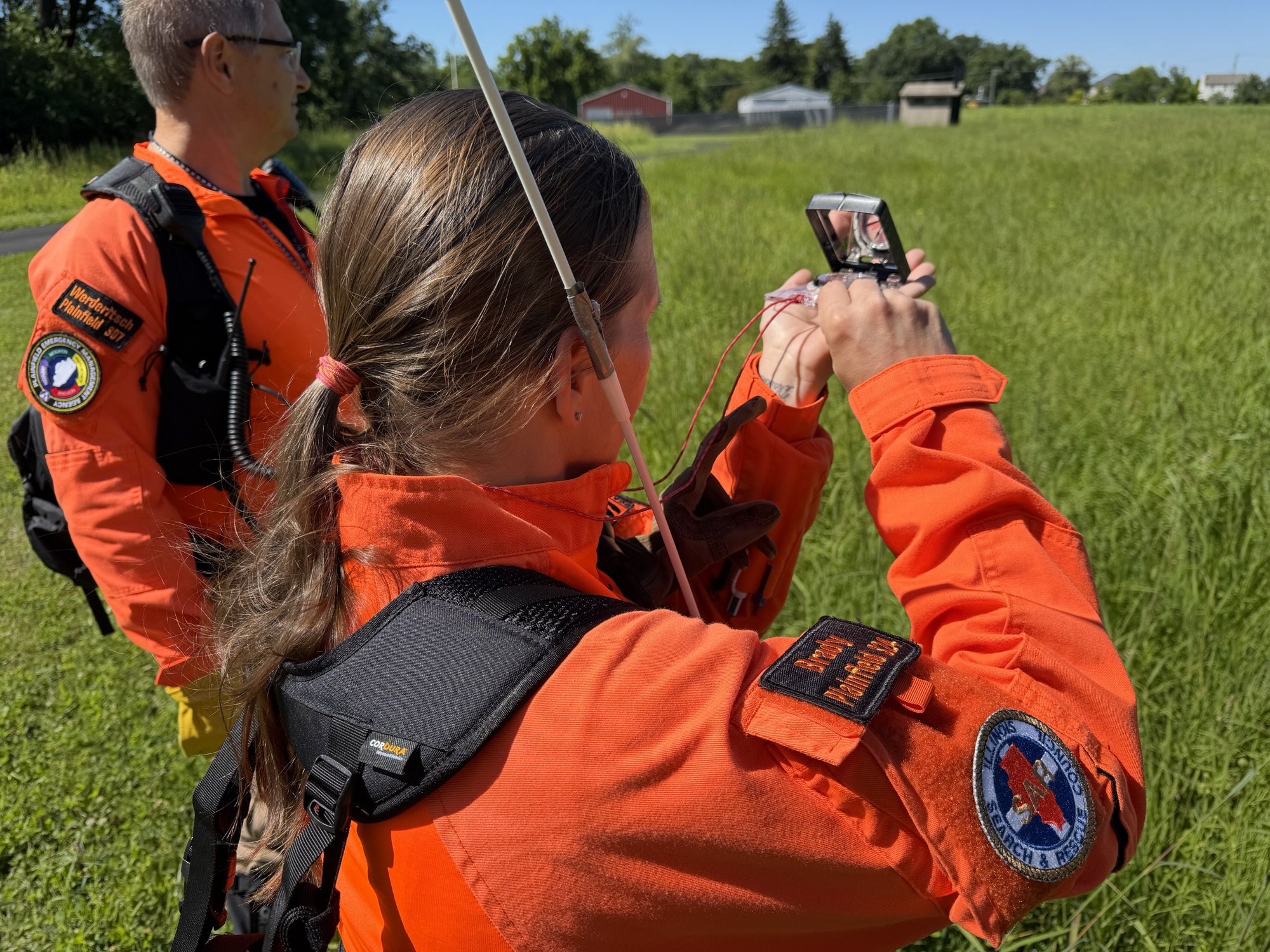
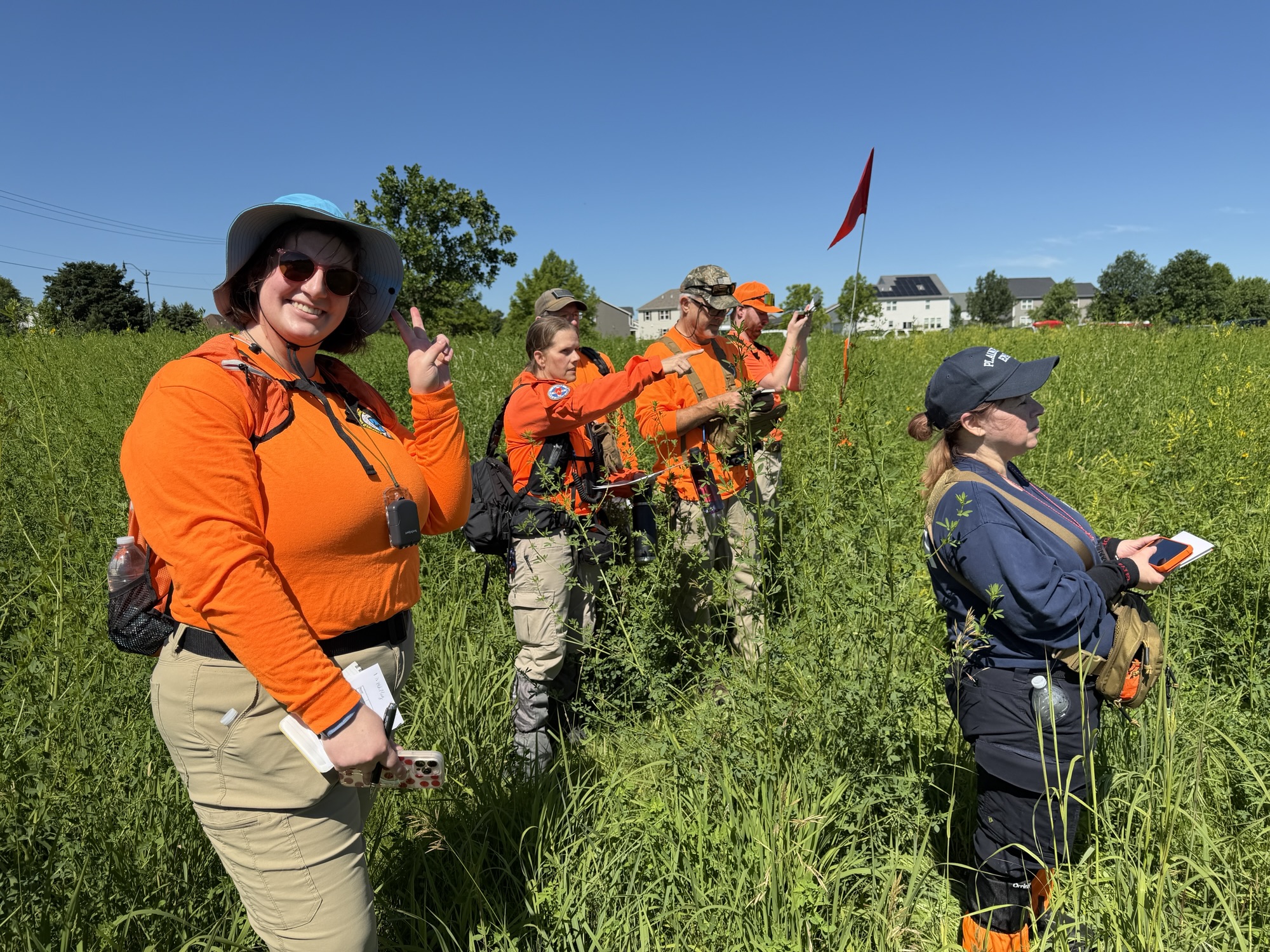
Although we’re all volunteers, the services we provide require us to be proficient & professional in our duties. Although the term “first responders” primarily means police officers, firefighters, paramedics and dispatchers, we are part of the team. We don’t get to run at the problems like our brothers & sisters in blue or bunker gear do, but our assistance on the periphery helps them focus their efforts on the problem at-hand.
For us to maintain a level of proficiency in our skills, we train. I am fortunate to be a member of a GSAR cadre that has strong leadership – People who are really passionate about what it is we do. Their willingness to share what they know and to create training scenarios for the team to practice helps everyone keep their skills sharp.
Cornfield Search
This past weekend, a bunch of GSAR teams were invited back to the Leonard family farm in Wilmington, Illinois to participate in a training evolution. The family members have strong ties to various area emergency service providers Everyone who participated in the training was very appreciative of the family’s willingness to open up their home and their acreage to us for training.
Two years ago, we did search & rescue training in their cornfields during the day (you can read about that here). Last night, the bar was raised on us as we would be conducting a similar training evolution, but this time, we’d be training at night.
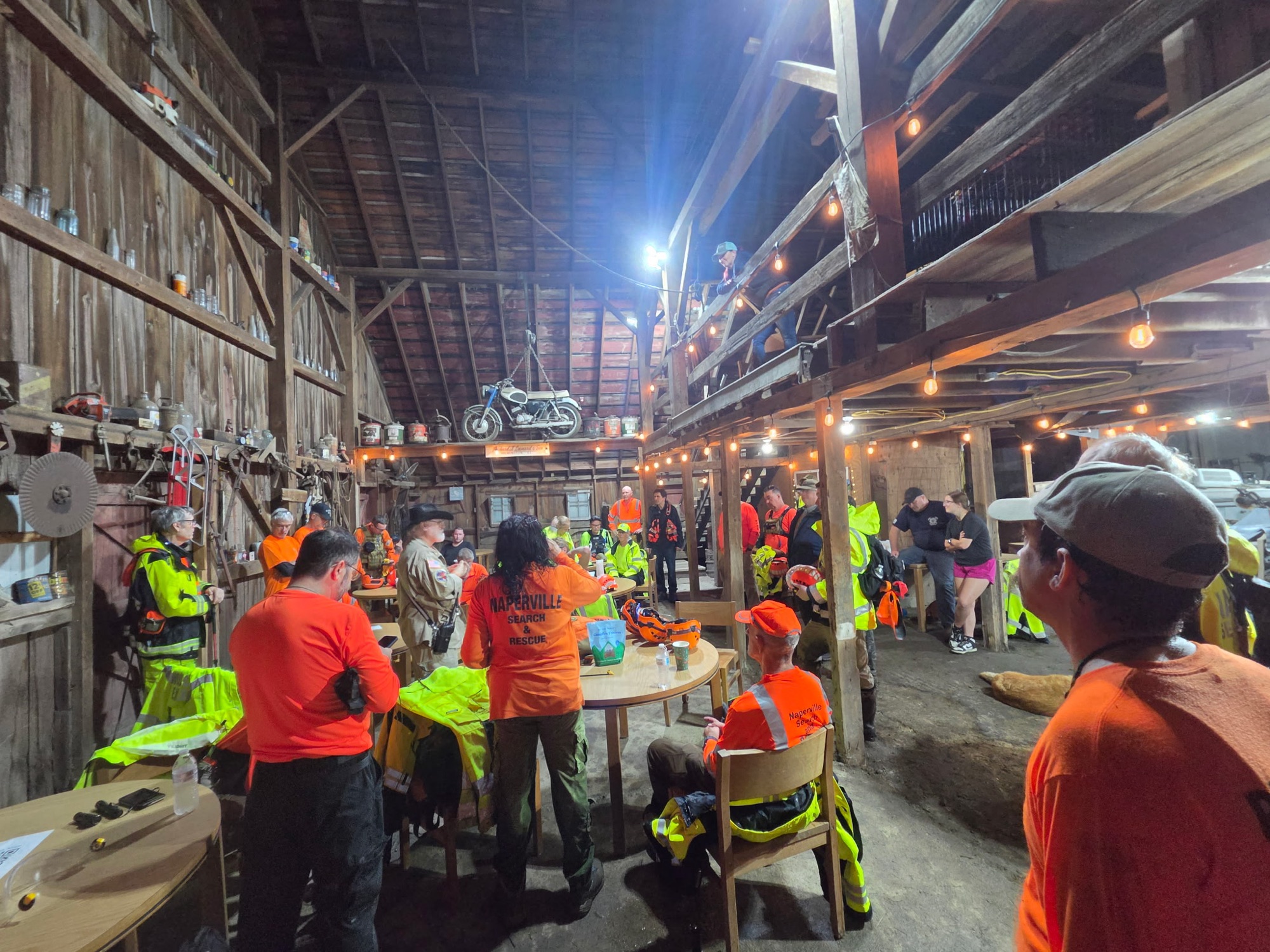
Of course, Mother Nature always gets a vote, and last night, she voted for rain. As if training in a cornfield at night wasn’t challenging enough…
The Scenario
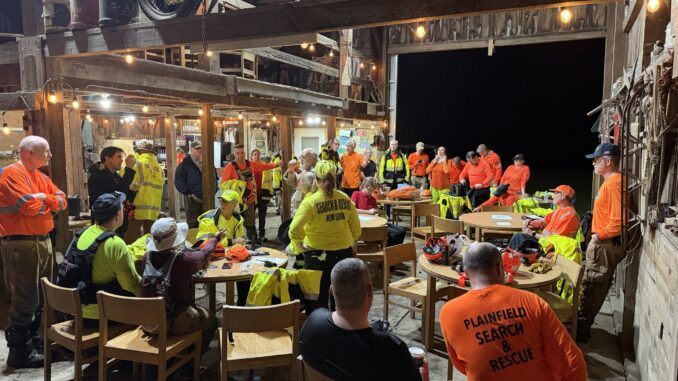
We had about 30 volunteers broken into 4 search teams, and the search base was manned with several search managers running the operations.
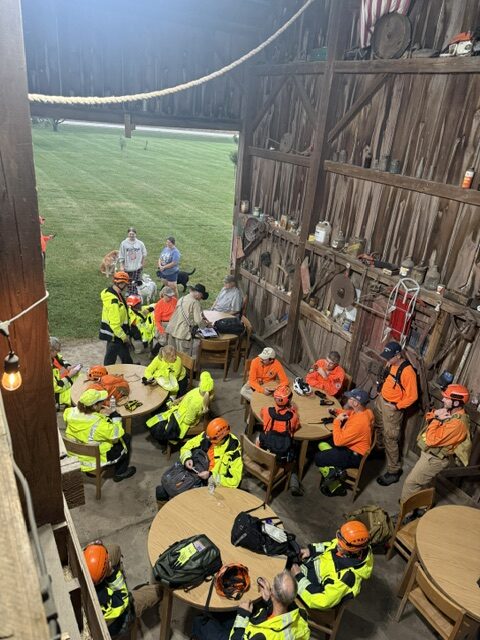
The scenario: A woman went missing after chasing her lost dog into the corn. She presumably became disoriented and couldn’t find her way back home.
Each search team was given a sector of the cornfield for their primary search area. The mission: Find the missing person.
The Search
Our team arrived at our search area just as nightfall was setting in. Once we got into position and made our first search pass, it became very clear: The corn was wet. The weeds in the end rows were thick and wet. The ground was wet (but, surprisingly, pretty trackable). Oh, and it was raining. Not drizzling. It was raining.
How Did We Do?
One of the challenges we had was figuring out how the corn rows were running. By the time we finished our first pass, it was dark out. The only way to SEE the rows was to be IN the rows. Once we confirmed the direction of the plants we settled into a good rhythm.
Because of the low light conditions, we had to have one searcher in between each row of corn. Previously during the daytime search, we were able to be positioned in every other row since the visibility was such that you and your adjacent search partner could see the row in between you. But in the dark with only a headlamp or flashlight, there was no way to confidently see into the adjacent row – Yes, it was that dense!
I thought our team did very well. Looking at our CALTopo tracks in the clip (below), we covered quite a bit of ground in a short amount of time.
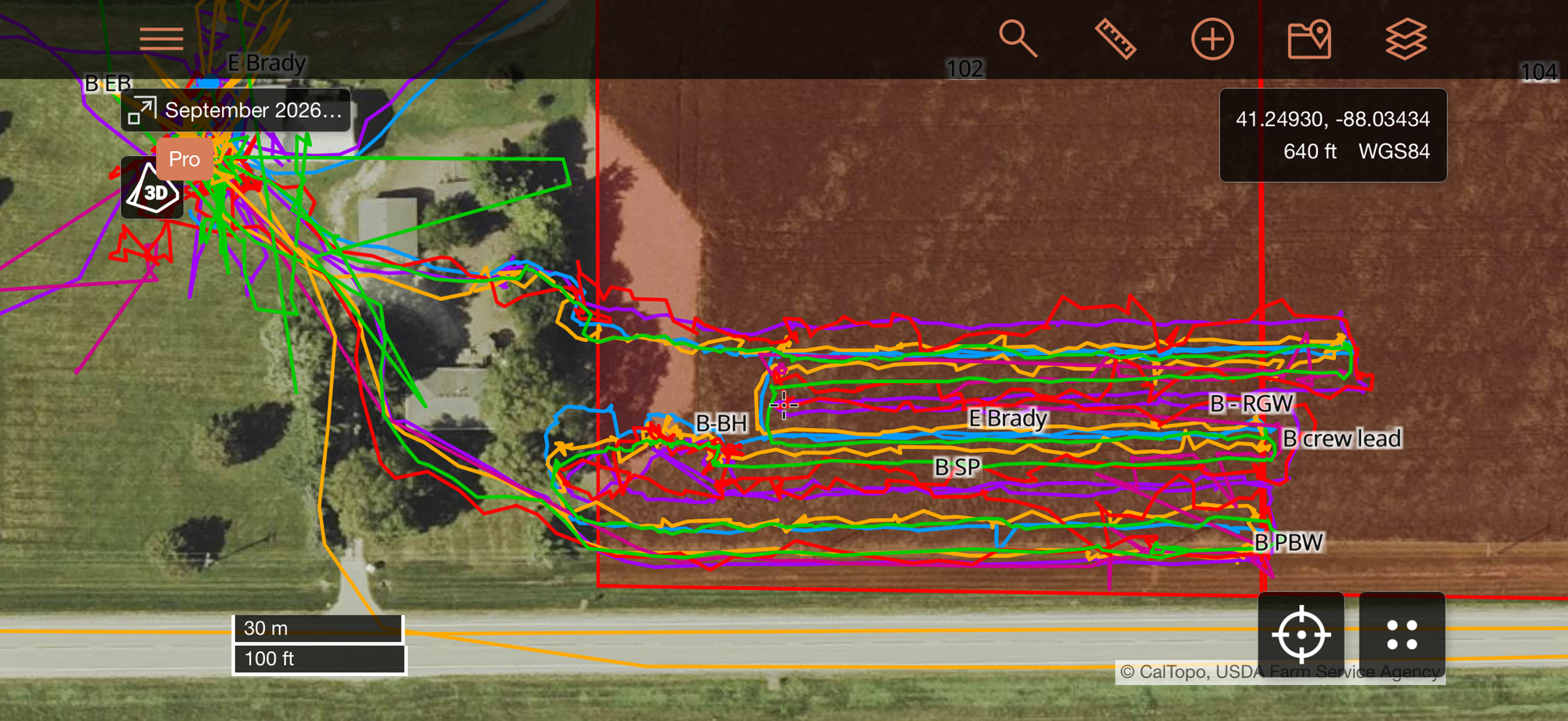
About an hour into the evolution, we heard a call on the radio that thunder & lightning were reported in the area. Search base suspended the operations and called all of the teams back to the barn. Dang!! Our team had just gotten into a good rhythm and could have covered a lot more ground. But of course, it was the right call to have everyone return to base.
After Action’s & Notables
I’ll chronicle my personal AAR notes here, in no particular order.
My Packout
I took quite a bit of time in the afternoon making a pass through all of my gear, making sure I had what I needed. With rain in the forecast and temperatures in the low 70’s, I was debating how much rainwear I should bring. I sprayed my boots and upper shell with Scotchgard. I grabbed my boot covers as well. I knew we’d likely be soaked given the search environment, so there wasn’t much sense in trying to over-think it.
As far as my chest rig goes, I try not to “over-carry.” I think that my search kit includes what I might likely need and not a lot of extra gear (If you’re interested, you can see what I typically carry in the worksheet that I built in this article). Two compasses, flagging tape, writing utensils, personal first aid kit, light & water are my must-have’s. Since it was a training evolution, I brought my GoPro along to see if I could get some footage (which I did!).
Getting to the Garage Early
Generally speaking, one of the more-stressful functions for me responding to our callouts is loading up whatever truck I’m assigned to with what I need and getting out the door. Certainly, with training exercises being scheduled, I have extra time to get to the garage well-before we roll-out: I don’t like feeling like I’m in a rush.
Functioning in the Rain
I thought being rain-soaked was awesome! The wet corn. The high and dense areas of overgrown weeds. The downpour. I loved it! I thought our entire team did a great job in navigating the search area given the conditions.
Everything was so wet that trying to stay dry simply wasn’t a priority: I knew I’d be drenched, so no need to try to avoid it. As I was constantly using my hands to clear the corn leaves & weeds in front of my path, I found myself frequently wringing out my leather gloves. Again, not a factor, just mentioning it here for the next time.
Just like at work, my overboots were perfect for the ground conditions. They kept my feet dry, and I’m a big fan of dry feet. Surprisingly, the soil wasn’t as slick as I had expected it would be so keeping my footing was no factor. Hot tip for any of you reading this: Anytime you’re putting your primary footwear into an overboot, always use a grocery bag on your base layer boot – The bag acts like a slip liner and allows you to easily slip out of them. If you’ve ever struggled with trying to pull a boot out of snow boots, let’s just say you can thank me later for the tip.
Visibility Was Reduced
One thing that stood out to me was the hindrance of visibility.
There were multiple factors at play, including the corn leaves, weed growth in between rows, the rain and light conditions. During daytime hours, when artificial light wasn’t necessary, it’s pretty easy to see between corn rows. But it was a struggle in the dark, rainy conditions that we were operating in. I’d guess the maximum we could see down a clear row was about 25′.
I don’t remember having to knock down as much mid-row weed growth in previous year’s search as we did this year. Part of that may have been that farmers were forced to reduce weed control applications due to the pricing of chemicals and diesel fuel.
I ran with a single headlamp on my helmet and my bifocal safety glasses. As you’d expect, everyone’s glasses were getting splashed by wet leaves & rain, so maintaining clear vision was a bit of a challenge. But since we were looking for a lost human, given our row-to-row (basically shoulder-to-shoulder) proximity and our relatively slow but purposeful pace, I felt like I had adequate visibility in the event that we found the individual.
Other Odds & Ends
- Leather gloves are the way to go. Yes they got soaked. But yes, you can wring them out.
- Our group’s pacing could have been better. Because of the conditions varying row-to-row, some searchers were able to move at a pretty good clip while others were battling through the sporadic & dense weed growth that required more time to move. Ideally, searchers should be working in close proximity to each other while moving forward.
- Protective eye wear was an absolute must. The visibility issues combined with the weeds and draping corn leaves had all of us getting every part of our faces & bodies getting slapped by vegetation. It was impossible to keep your face completely debris-free, there was always something needing to be cleared.
- Listening was a challenge. The rain and the rustling of the corn leaves while we were moving made listening for a responding voice to a callout was hard. Even when the group came to a full stop, the rain was loud enough to be a distraction.
Close Out
All-in-all, it was a great FTX. Training has great value when participants are given challenging conditions in a controlled environment, and that’s what we got. Allen and the rest of the training cadre did a great job organizing & managing everything. It is a heavy lift to run team training evolutions like this one – Much respect goes to those who have the experience & abilities to organize it all.
If you were also a participant in the evolution, feel free to leave a comment with anything you found valuable.
Be the first to comment