
I thought that I’d posted a series of links & articles about planning for jobsite emergencies, but I guess I was mistaken.
Things to consider:
- Do you have a communications plan? Have a contact tree in everyone’s work truck. Make sure the office engineer has it displayed on the wall in his office for reference. Talk about it at progress meetings: If & when something happens, make sure everyone on the project understands the protocols.
- Is your staff prepared? Make it a training – Do a dry run over lunch. Make something up:
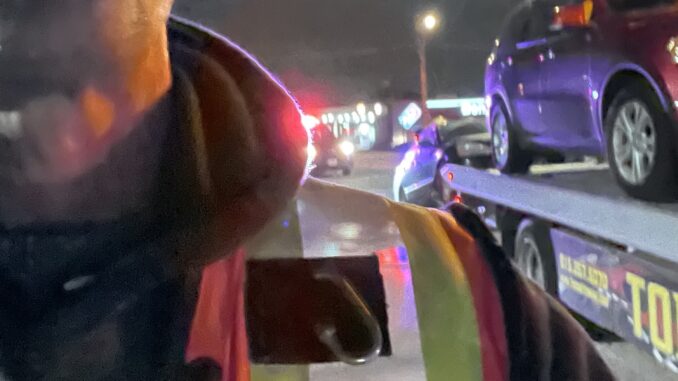
- A traffic accident with lane blockages in the work zone
- A gas main hit
- An injured worker
- What will you do during inclement weather? Heavy rain. Deep snow. If you want an example, just read my article on flooding I-290.
- How fast can you & your contractor react? What happens when you a lighting cabinet goes down? Or a catch basin frame cracks from a snow plow blade?
Brad Humphrey provides some very practical areas of focus when it comes to pre-planning for emergencies (link to his article in ForConstructionPros.com is linked below. A few of the items Brad writes of struck chords with me.
Pre-Plan by Type of Event
The time to plan for an emergency is before it happens. Think through different aspects of your jobsite and develop plans for:
- Employee injury (minor and catastrophic)
- Non-employee injury (say, a visitor, pedestrian or motorist)
- Utility hit (gas, water, electric, fiber)
- Weather change (quick-moving storm, threat of tornado, wind, heavy rain, etc.)
How do you want your people, subcontractors & subconsultants to react? It’s inevitable: Things will happen on your jobsite. You and your crew need to understand what the protocols are. And sometimes, the best way to do that is by pre-planning. Hopefully, nothing every goes sideways on your jobsite, but you want everyone to be at-the-ready in case a situation happens to develop.
Have Emergency Contact Information At-The-Ready
Make sure that every person on the jobsite understands the communication protocols and has the phone numbers of every potential stakeholder available. Develop an Emergency Communications Plan for your project. You may be working for an agency that requires they make all formal notifications to public safety or local government representatives, or that the contractor who damaged the utility follow the proper protocols. But, I would argue that everyone on the jobsite should have all of the appropriate contact names & numbers available for the if & when. You’ll never hear a responding agency, utility or emergency responder say that they are bothered by multiple calls regarding an incident. It’s always better to call than to not call.
Dry Run Emergency Scenarios
The only way to get good at something is to practice. Although we might think that practicing, say, a utility hit, isn’t a worthwhile endeavor, I would argue it absolutely is. Does everyone on your staff know how to react to a car accident that occurs tomorrow on your jobsite? Do they know who to call? What is their protocol? This is a simple tabletop exercise that could be run as a meeting start-up agenda item. It could be a great excuse to buy everyone lunch and rally around the kitchen table, dry running a few different scenarios. Be creative. Find ways to engage your crews. Check to see if they have the Emergency Communications Plan in their trucks or on their portable devices.

A couple of other resources:


Be the first to comment